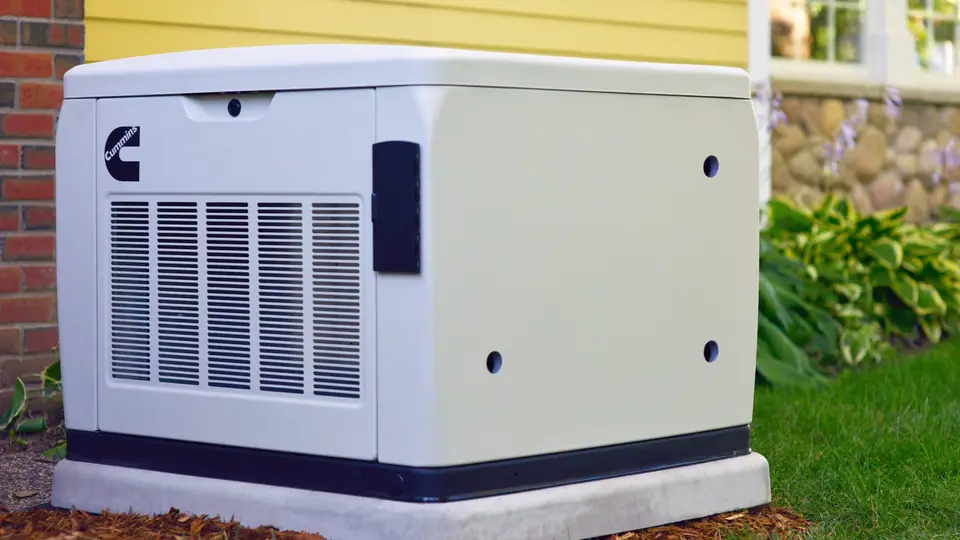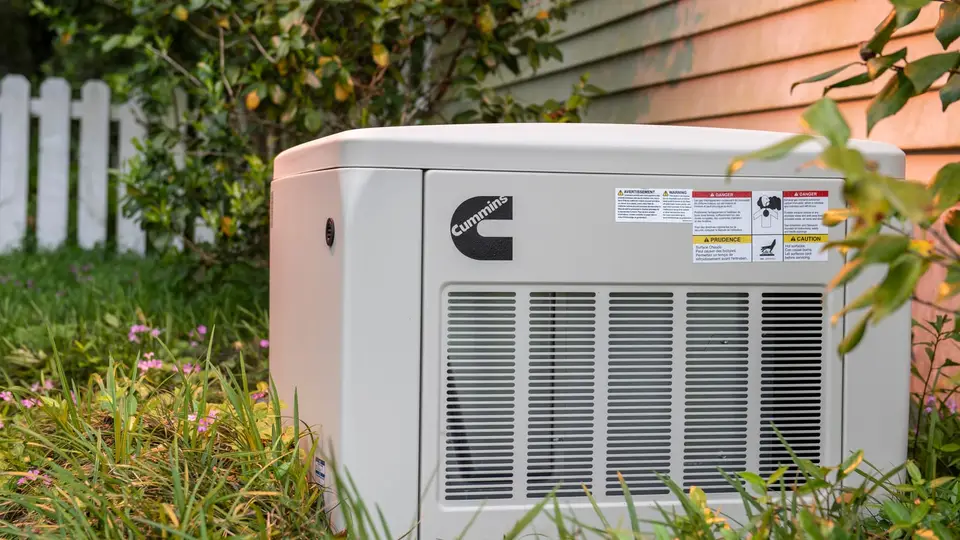
Size a standby generator from a load calculation, not square footage. Most 2,000–3,500 sq ft DFW homes with central AC fit an air-cooled 17–20kW Cummins unit, often with load management; essential-circuit setups fit 13kW; large homes with several HVAC systems move to the liquid-cooled range at 25kW and up.
This guide is part of our Standby Generator Installation service in Dallas–Fort Worth.
Size a standby generator from a load calculation of what it will actually carry, not from square footage or an online calculator. For most 2,000–3,500 sq ft DFW homes with central AC that lands on an air-cooled 17–20kW unit, usually with load management; an essential-circuit setup can fit 13kW; and large homes with several HVAC systems move to the liquid-cooled range, which starts at 25kW.
What the code requires the generator to carry
A home standby generator with an automatic transfer switch is an optional standby system under NEC Article 702. Section 702.4 gives two ways to size it: the generator carries the full load the transfer switch can connect, or an automatic load management system limits what is connected and the generator is sized for the most that system will allow (Schneider Electric, NEC 702.4 explained). Either way the starting point is a load calculation.
Whole-home or essential circuits
Whole-home
The generator backs up the entire panel. The calculation has to account for the largest motor loads, especially AC compressors, which draw a burst of current when they start. A home with two AC systems can often stay on an air-cooled 20kW unit if load management stops the two compressors from starting together; without it, the calculation may call for liquid-cooled.
Essential circuits
Only chosen circuits are backed up: typically the refrigerator, freezer, one AC system, some lighting, internet, and any medical equipment. Because the load is smaller, this often fits the 13–17kW range and costs less to buy and install.
Cummins sizes and the homes they fit
Clements Electric installs Cummins as the electrical contracting arm of UTS ElectricPros, LLC, an authorized Cummins dealer. The air-cooled range is the RS13A, RS17A and RS20A; the liquid-cooled range starts with the RS25 (UTS ElectricPros, Cummins generators).
- 13kW (RS13A, air-cooled): essential-circuit setups, smaller homes and townhomes.
- 17–20kW (RS17A / RS20A, air-cooled): whole-home coverage with central AC for most 2,000–3,500 sq ft DFW homes, often with load management.
- 25kW and up (liquid-cooled RS range): homes over about 4,000 sq ft, several HVAC systems, pools, guest houses and shops.
Check the fuel. Most DFW homes run generators on natural gas, and output is lower on natural gas than on propane: the RS20A is rated 75 A on natural gas and 83.3 A on LP vapor, which at 240 V is 18kW and 20kW (Cummins RS20A specifications, as listed by BNH Generators). The load calculation should use the natural gas rating if that is your fuel.
If you are working from your service size instead, see what size generator a 200-amp service needs.
Too small or too big
An undersized generator cannot hold voltage when a large motor starts. It will try, the voltage sags, and its overload protection shuts it down, which leaves you without power at exactly the moment you needed it. An oversized generator works, but you pay more for the unit, may need more gas capacity at the meter, and burn more fuel every hour it runs.
Installed cost by size in DFW (2026)
These are estimates for a complete installation: the generator, automatic transfer switch, concrete pad, electrical hookup, permit and startup. The gas line is run by a licensed plumber, which we arrange on a turnkey job, or you can hire your own. Estimate only. Every installation is different; a site visit is required to determine whether your installation will cost less or more than this estimate.
- 13kW air-cooled (RS13A): $11,000 – $14,000 all in
- 17kW air-cooled (RS17A): $12,500 – $15,500 all in
- 20kW air-cooled (RS20A), typical complete whole-house installation: $13,500 – $17,000 all in
- Liquid-cooled 25kW and up: quoted in writing after an on-site survey
- Equipment prices for every Cummins model are published at utselectricpros.com
What moves the price within a range: the distance from the gas meter to the generator location, whether the panel or service needs work first, and site preparation for the pad. Our whole-house generator cost guide breaks this down, and generator installation covers what a turnkey job includes.
Ready to get started?
Frequently Asked Questions
For most 2,000–3,500 sq ft DFW homes, yes, central AC included, often with load management so two AC systems start one at a time. On natural gas the RS20A is rated 18kW; on propane, 20kW. Homes over about 4,000 sq ft or with several HVAC systems usually move up to the liquid-cooled range, which starts at 25kW.
Per Cummins' published specifications, the RS20A uses about 268 cubic feet of natural gas per hour at full load (roughly 2.6 therms). At lighter loads it uses less, and larger liquid-cooled units use more.
It is possible but rarely cheap. The transfer switch, wiring and gas supply are sized with the generator, so moving from air-cooled to liquid-cooled usually means replacing more than the generator itself. It is worth sizing for loads you already know are coming, such as an EV charger or a pool.